
Buying a New Car After a Violation: Insurance Before or After?
Compare Rates After a ViolationThe Pre-Purchase Quote Window: Why Timing Your Insurance Check Matters
Most drivers wait until after signing the purchase agreement to get insurance quotes for their new car. If you have a violation from the past 6-18 months, that delay costs you money. Here's why: when you request a quote for a vehicle you don't yet own, most carriers run your current motor vehicle record but don't trigger a full underwriting refresh until you bind coverage. That creates a 3-7 day window where you can lock rate estimates based on your existing policy tier—even if a recent violation hasn't been factored into your premium yet.
Once you purchase the vehicle and request coverage to start, carriers run a fresh MVR pull as part of the binding process. If your violation posted to your driving record in the past 30-90 days but hasn't hit your current policy yet, this is when it surfaces. The difference in monthly premium between quoting before purchase (with your pre-violation tier) versus after (with the violation now visible) typically ranges from $40 to $95 per month, depending on violation severity and carrier.
This window doesn't hide the violation permanently—it appears at your next renewal regardless. But it lets you compare rates while still classified in your current risk tier, giving you leverage to negotiate with your existing carrier or switch to a competitor before the violation triggers a surcharge. Dealers often pressure you to arrange insurance within 24 hours of purchase. If you wait until that moment to shop, you've lost the cleanest comparison window you had.
How Vehicle Purchase Triggers Underwriting Review
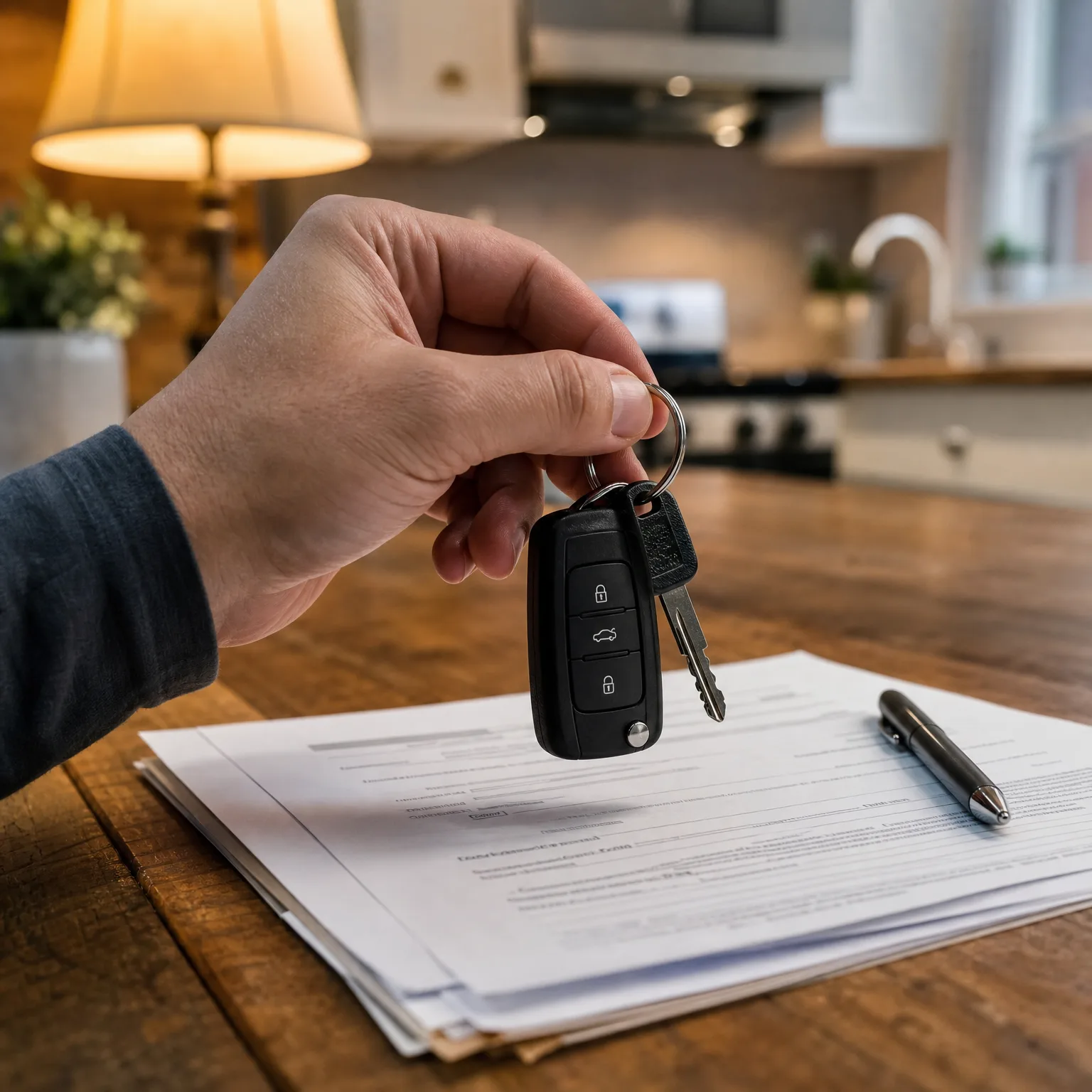
Adding a new vehicle to your policy isn't a simple administrative change—it's an underwriting event. Carriers treat it similarly to a policy inception or renewal: they re-evaluate your risk profile, pull your current MVR, and adjust your rate tier if new information appears. This is why the timing of your purchase relative to when your violation posted to your state driving record matters more than most drivers realize.
If your violation occurred 45 days ago but your state DMV took 30 days to process and post it, there's a chance it's on your record now but wasn't when your current policy renewed. When you add the new car, the carrier pulls a fresh record, sees the violation, and applies the surcharge immediately—even though your current vehicle's premium hasn't changed yet. You're now paying the higher rate on both vehicles, and your next renewal will reflect the violation across your entire policy.
Some carriers delay the surcharge until renewal even after discovering a violation during a policy change, but this varies significantly by insurer and state. Approximately 60-70% of carriers apply the surcharge at the time of the vehicle addition if the violation is discovered during that underwriting review. The remaining 30-40% wait until renewal, but you won't know which camp your carrier falls into until after you've already purchased the car. Running quotes before purchase removes this uncertainty.

The Right Sequence: Quote, Compare, Then Purchase
The strategic sequence is: identify the vehicle you plan to purchase, run insurance quotes for that specific VIN or comparable vehicle class, compare those rates against your current carrier's quote to add the vehicle, then make your purchase decision. This reverses the typical process, but it's the only way to compare rates while your violation status is still in flux.
When you contact insurers for quotes, specify that you're planning to purchase the vehicle within the next 7-10 days and want a rate estimate before finalizing. Most carriers will provide a bindable quote valid for 30 days, which you can convert to active coverage the day you take delivery. This locks your rate tier at the time of the quote—before the underwriting refresh that happens when you bind coverage reveals any recent violations.
If you're financing the vehicle, the lender requires proof of coverage before you drive off the lot, often within 24-48 hours of purchase. This is why the pre-purchase quote is critical: you've already done the comparison work, you know which carrier offers the best rate for your current risk profile, and you can bind coverage immediately without scrambling to compare options under time pressure. Drivers who wait until the dealer asks for insurance information are forced to choose between their current carrier (who may not be competitive post-violation) or a single competitor they can reach by phone in the next two hours.
Which Carriers Compete for Post-Violation New Vehicle Buyers
Not all carriers treat new vehicle purchases the same way after a violation. Some exit-price by applying maximum surcharges at the first underwriting opportunity. Others see new vehicle buyers as retention opportunities and apply more moderate increases, especially if you're bundling the vehicle with an existing policy or adding comprehensive and collision coverage.
Carriers that specialize in non-standard auto insurance often offer the most competitive rates for drivers with recent violations who are purchasing newer vehicles, because they're already underwriting for higher-risk profiles. These insurers typically apply surcharges that are 15-30% lower than standard carriers for the same violation, and they don't penalize new vehicle additions as heavily. However, their base rates may be higher, so the total premium isn't always lower—you need to run the full comparison.
Standard carriers with violation forgiveness programs or accident-free discounts may also compete aggressively if your violation is your first in 3-5 years and you're adding a vehicle with strong safety ratings. These programs aren't advertised uniformly, and eligibility varies by state, so the only way to know if you qualify is to request quotes from 4-6 carriers before purchase. If you wait until after purchase, you lose negotiating leverage—you're now committed to the vehicle and need coverage immediately, which removes the ability to walk away if rates aren't competitive.

Shop Again Before Your Next Renewal Hits
Compare Rates After a Violation
Financing, Leasing, and Coverage Requirements
If you're financing or leasing the new vehicle, your lender or lessor will require full coverage including comprehensive and collision with specific deductible limits—typically $500 or $1,000 maximum. These coverage requirements increase your premium significantly compared to liability-only coverage, and the increase is magnified if you have a recent violation.
The violation surcharge applies to your liability premium, but it also indirectly affects your comprehensive and collision costs because carriers adjust your overall risk tier. A driver with a clean record might pay $85/month for comp and collision on a $30,000 vehicle. The same driver with a recent speeding ticket might pay $95-$110/month for identical coverage, because the carrier has moved them into a higher-risk pricing tier that affects all coverage components.
Gap insurance—which covers the difference between what you owe on the loan and the vehicle's actual cash value if it's totaled—adds another $15-$25/month, and this cost isn't affected by violations. However, some carriers bundle gap coverage with comp/collision at a discount, and these bundling discounts are often unavailable or reduced for drivers in higher-risk tiers. Lenders typically require proof of coverage listing them as the lienholder within 72 hours of purchase, so if you're comparing carriers, confirm that each can add the lienholder endorsement and provide proof immediately when you bind coverage.

When to Disclose the Violation During the Quote Process
You don't need to volunteer violation information when requesting quotes—carriers will discover it when they pull your MVR as part of the underwriting process. However, if your violation occurred within the past 30 days and you're unsure whether it's posted to your driving record yet, you should mention it during the quote process. Most carriers will provide two quotes: one assuming a clean record, one assuming the violation has posted. This gives you a realistic range and avoids the surprise of a rate increase between quote and binding.
Some states require immediate reporting of certain violations to your insurer—typically DUIs, reckless driving, or license suspensions. If your state has this requirement and you haven't yet notified your current carrier, they'll discover the violation when you request a quote to add the new vehicle, which triggers the same underwriting review. In these cases, there's no strategic advantage to quoting before purchase because the violation will surface regardless of timing. Check your state's disclosure requirements before deciding whether to delay or accelerate your vehicle purchase.
If you completed a defensive driving course or other violation-mitigation program, disclose this during the quote process even if it hasn't yet been updated on your MVR. Some carriers will apply the discount or reduced surcharge immediately if you provide proof of completion, while others wait until the state updates your record. Either way, you want the most accurate quote possible before making a purchase decision, and documented mitigation efforts can reduce your rate by 5-15% depending on the carrier and violation type.
Next Steps: Quote Before You Sign
If you're planning to purchase a vehicle within the next 30 days and you have a violation from the past 12-18 months, run insurance quotes now—before you set foot in a dealership or finalize a private sale. Identify the specific make, model, and trim level you're considering, or request quotes for a comparable vehicle class if you haven't chosen a specific VIN yet. Get bindable quotes from at least three carriers, including your current insurer and at least two competitors.
Compare the total monthly cost including all required coverages, not just the liability premium. If you're financing, confirm that each carrier can meet your lender's coverage requirements and provide immediate lienholder documentation. Ask each carrier explicitly when the violation surcharge will apply—at the time of vehicle addition or at your next renewal—and get that answer in writing if possible.
Once you've identified the most competitive option, you can purchase the vehicle with confidence that you're not walking into a 25-40% rate increase the moment you add it to your policy. The goal isn't to hide the violation—it's to compare rates while you still have negotiating leverage and time to shop, rather than under the time pressure of a dealer finance office or lender deadline.
Frequently Asked Questions
Can I get insurance for a car I don't own yet?
Yes, most carriers will provide a bindable quote for a specific vehicle before you purchase it, valid for 30 days. You provide the VIN or vehicle details, get the quote, then activate coverage the day you take ownership. This lets you compare rates before committing to the purchase.
Will adding a new car to my policy make my violation appear faster?
Yes, adding a vehicle triggers an underwriting review where carriers pull a fresh MVR. If your violation posted to your driving record but hasn't hit your current policy yet, this review will surface it and most carriers will apply the surcharge immediately rather than waiting until renewal.
Does the type of car I buy affect how much my violation increases my rate?
Yes, higher-value vehicles and those with higher theft or repair costs increase your comprehensive and collision premiums, and the violation surcharge is often calculated as a percentage of your total premium. A $40,000 car with a violation will cost more to insure than a $20,000 car with the same violation, beyond just the base coverage difference.
Should I wait until my violation falls off before buying a new car?
Not necessarily. Violations typically affect rates for 3-5 years, and delaying a necessary vehicle purchase that long often isn't practical. Instead, focus on comparing carriers before purchase to find the most competitive post-violation rate, and consider whether a less expensive vehicle would offset some of the insurance cost increase.
Can I keep my old car on the policy to avoid the underwriting review?
Keeping your old vehicle doesn't prevent the review when you add the new one—carriers still pull a fresh MVR when you request to add any vehicle. You'd pay to insure both vehicles, which is almost always more expensive than the violation surcharge on a single vehicle. This strategy doesn't save money.
Related Articles
TX License Suspension: SR-22 Triggers and Rate Impact
5/17/2026

CA Habitual Traffic Offender: 3-Point HTO Trigger
5/17/2026
Cheapest Insurance After At-Fault Accident by State
5/17/2026

Divorce After a Violation: Policy Split Mechanics
5/17/2026

7 Post-Violation Insurance Mistakes Costing You $800/Year
4/11/2026

Following Too Closely in Ohio: 2-Point Rate Impact
5/17/2026