
License Never Issued But Driving: Rate Impact & Path Forward
Compare Rates After a ViolationHow Carriers Price Never-Licensed Driver Status
Carriers treat never-licensed driving differently than driving with a suspended or revoked license because it signals zero interaction with state licensing requirements rather than a penalty for prior violations. Most standard-market insurers (State Farm, Allstate, Progressive) deny coverage outright to applicants with no valid license on file, regardless of driving history. Mid-tier carriers apply categorical surcharges ranging from 60-95% above base rates for drivers who obtain a license after being caught driving without one. Non-standard carriers price this scenario using flat administrative penalties—typically $45-$85 per month on top of base premiums—because state regulations in 31 states classify unlicensed operation as an administrative violation rather than a moving violation.
The rate impact depends on whether your state required SR-22 filing as part of your penalty. In states that mandate SR-22 for unlicensed driving (Florida, California, Virginia, Illinois), you face dual pricing pressure: the unlicensed driver surcharge plus SR-22 program costs. Combined monthly premiums in these states typically run $280-$420 for minimum liability coverage. In states without SR-22 requirements for this violation, you enter high-risk pricing without the filing burden, bringing premiums to $180-$260 monthly once licensed.
Carriers reassess unlicensed driver surcharges at your first renewal after obtaining a valid license. If you maintain continuous coverage and a clean driving record for 12 months post-licensing, most mid-tier insurers remove 40-60% of the initial penalty. Standard-market eligibility typically opens 24-36 months after licensing if no additional violations occur during that window.

State Reinstatement Requirements Before You Can Insure
You cannot bind auto insurance coverage without a valid driver's license number in 48 states. Alaska and New Hampshire allow policy binding with a pending license application under specific circumstances, but your policy activates only after the license issues. Most states require you to complete a multi-step reinstatement process before the DMV will issue your first license if you were caught driving without one.
Typical reinstatement steps include paying court fines (ranging from $150-$1,200 depending on state and whether this was a first or repeat offense), completing a driver education course if you're under 25, and filing proof of insurance (SR-22 in some states) before the license application. The sequence matters: most states require proof of future insurance before issuing the license, but carriers require a valid license number before binding coverage. You resolve this by obtaining an insurance quote contingent on license issuance, paying the first month's premium, then presenting the binder or declaration page to the DMV as proof of future coverage.
SR-22 states complicate this further. If your state requires SR-22 filing for unlicensed driving, you must find a carrier willing to file the SR-22 before your license issues. Non-standard carriers (The General, Acceptance Insurance, Direct Auto) handle this scenario routinely and will file the SR-22 with your pending license application number, allowing you to complete reinstatement and activate coverage once the license prints. Processing time from SR-22 filing to license issuance typically runs 10-21 business days depending on state DMV workload.

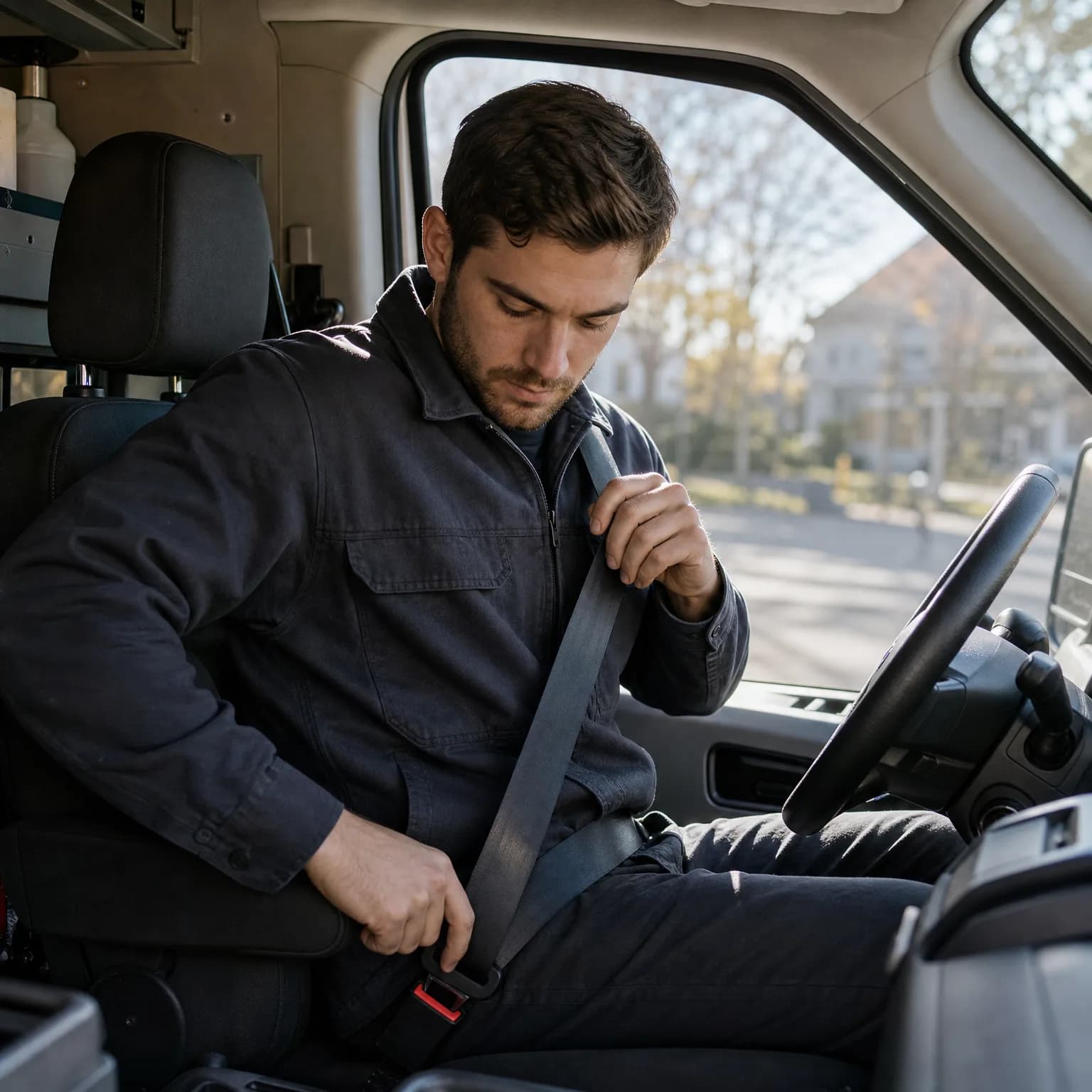
Standard vs Non-Standard Market Pricing After Licensing
Once licensed, your carrier options split into two markets with dramatically different pricing. Non-standard carriers accept never-licensed drivers immediately but price using composite risk models that assume higher lifetime claim probability. Monthly premiums for minimum liability coverage in non-standard markets typically range from $220-$340 in low-cost states (Ohio, Idaho, Wisconsin) to $380-$520 in high-cost states (Michigan, Florida, Louisiana). These rates assume no additional violations and a standard vehicle profile.
Standard high-risk programs through mid-tier carriers (Progressive, Nationwide, Kemper) offer 30-45% lower premiums but impose waiting periods. Most require 6-12 months of continuous non-standard coverage with no lapses before they'll quote you. When you do qualify, expect monthly premiums of $140-$210 for minimum liability in low-cost states and $240-$360 in high-cost states. The savings justify the wait if you can maintain clean coverage during the non-standard period.
Some drivers skip directly to standard high-risk programs by bundling the unlicensed violation with immediate defensive driving course completion and higher liability limits at binding. Carriers weight this combination favorably because it demonstrates licensing compliance plus risk mitigation behavior. If your state allows defensive driving credit for administrative violations, completing an approved course before your first quote can reduce initial premiums by 8-12% and accelerate your eligibility for standard-market repricing at first renewal.

Shop Again Before Your Next Renewal Hits
Compare Rates After a ViolationTimeline: When Rates Improve After Obtaining Your License
Carriers reassess never-licensed driver surcharges at three specific checkpoints. Your initial binding uses composite administrative penalty pricing that treats the unlicensed period as a categorical risk factor. Six months after licensing, carriers pull an updated MVR to confirm no new violations occurred. If your record remains clean and you maintained continuous coverage, some non-standard carriers reduce premiums by 10-18% at this checkpoint without requiring you to reshop.
At your first renewal (typically 6 or 12 months after initial binding), standard high-risk programs become available if you've maintained coverage and added no violations. Shopping at this checkpoint typically produces savings of 25-40% compared to initial non-standard pricing. Carriers now price you as a high-risk driver with limited history rather than an unlicensed operator, shifting you into a lower-penalty tier.
The 36-month mark is when standard-market eligibility opens for most drivers. By this point, the unlicensed violation itself falls outside most carriers' primary underwriting windows, and your pricing depends primarily on your post-licensing driving record. If you accumulated no violations during those three years, you'll qualify for standard rates with a new-driver discount structure rather than violation-based surcharges. Drivers who entered the market at $280-$340/month in non-standard programs typically see rates fall to $95-$150/month at the 36-month checkpoint when moving to standard carriers.

Actions That Reduce Rate Impact in the Next 60 Days
Your first 60 days post-violation determine whether you enter non-standard markets at $340/month or high-risk standard programs at $210/month for comparable coverage. Obtain your valid license within 30 days of your court date. Every week of delay extends your non-standard market tenure because carriers date your "licensed driver" status from the issue date, not your violation resolution date.
Complete a state-approved defensive driving course before binding your first policy if your state allows administrative violation credit. Nine states (California, Florida, Texas, New York, Nevada, Arizona, Virginia, Georgia, Illinois) grant point removal or surcharge reduction for defensive driving completion within 90 days of an administrative violation. The course costs $25-$50 and produces $15-$35 in monthly premium savings for 36 months in these states.
Bind the minimum liability coverage your state requires, pay in full for six months if possible, and set automatic payments to avoid any coverage lapse. Continuous coverage is the single most important factor carriers evaluate at your 6-month and 12-month repricing checkpoints. A single 24-hour lapse resets your eligibility timeline and can add 15-25% to your premiums when you rebind. If paying in full isn't feasible, choose the shortest payment plan your carrier offers—typically monthly automatic withdrawal—to minimize lapse risk from missed payments.
Frequently Asked Questions
Can I get car insurance without a driver's license?
No, you cannot bind active auto insurance coverage in 48 states without providing a valid driver's license number. Alaska and New Hampshire allow contingent policy binding with a pending license application, but coverage only activates after the license issues. Most carriers require the license number at quote time to pull your MVR and assess risk.
How much does insurance cost after driving without a license?
Non-standard carriers typically charge $220-$340 monthly for minimum liability coverage in low-cost states and $380-$520 in high-cost states after you obtain a valid license. These rates assume no SR-22 requirement. In SR-22 states, add $45-$85 monthly for filing costs, bringing totals to $280-$420 for minimum coverage during your first policy term.
Does unlicensed driving show up on my insurance record permanently?
Unlicensed driving appears on your MVR for 3-5 years depending on state reporting rules, but carriers typically stop applying surcharges after 36 months if you maintain a clean record post-licensing. The violation remains visible to insurers during that window but shifts from active penalty pricing to historical record status at the three-year mark for most standard-market underwriting models.
Will my rate go down after I get my license?
Your rate decreases at specific repricing checkpoints—6 months, 12 months, and 36 months after obtaining your license—if you maintain continuous coverage and avoid new violations. Expect 10-18% reductions at six months with the same non-standard carrier, 25-40% savings at 12 months when switching to standard high-risk programs, and 45-65% total savings at 36 months when standard-market eligibility opens.
Do I need SR-22 insurance if I was caught driving without a license?
SR-22 requirements depend on your state. California, Florida, Virginia, Illinois, and 14 other states mandate SR-22 filing for unlicensed driving convictions. Your court judgment or DMV reinstatement letter will specify if SR-22 is required. If mandated, you must maintain the filing for 3 years in most states, with monthly SR-22 program costs adding $45-$85 to your base premium.
Related Articles

Cheapest Insurance After Suspension by State
5/17/2026

Driving Without Renewed Insurance: Rate Impact
5/17/2026

Canceled Insurance Violation: Rate & SR-22 Reality
5/17/2026

License Renewal Caught Uninsured: Rate Impact
5/17/2026

3-Month Lapse: Rate Impact & SR-22 Filing Requirements
5/17/2026

Cheapest Insurance After Suspension by State
5/17/2026