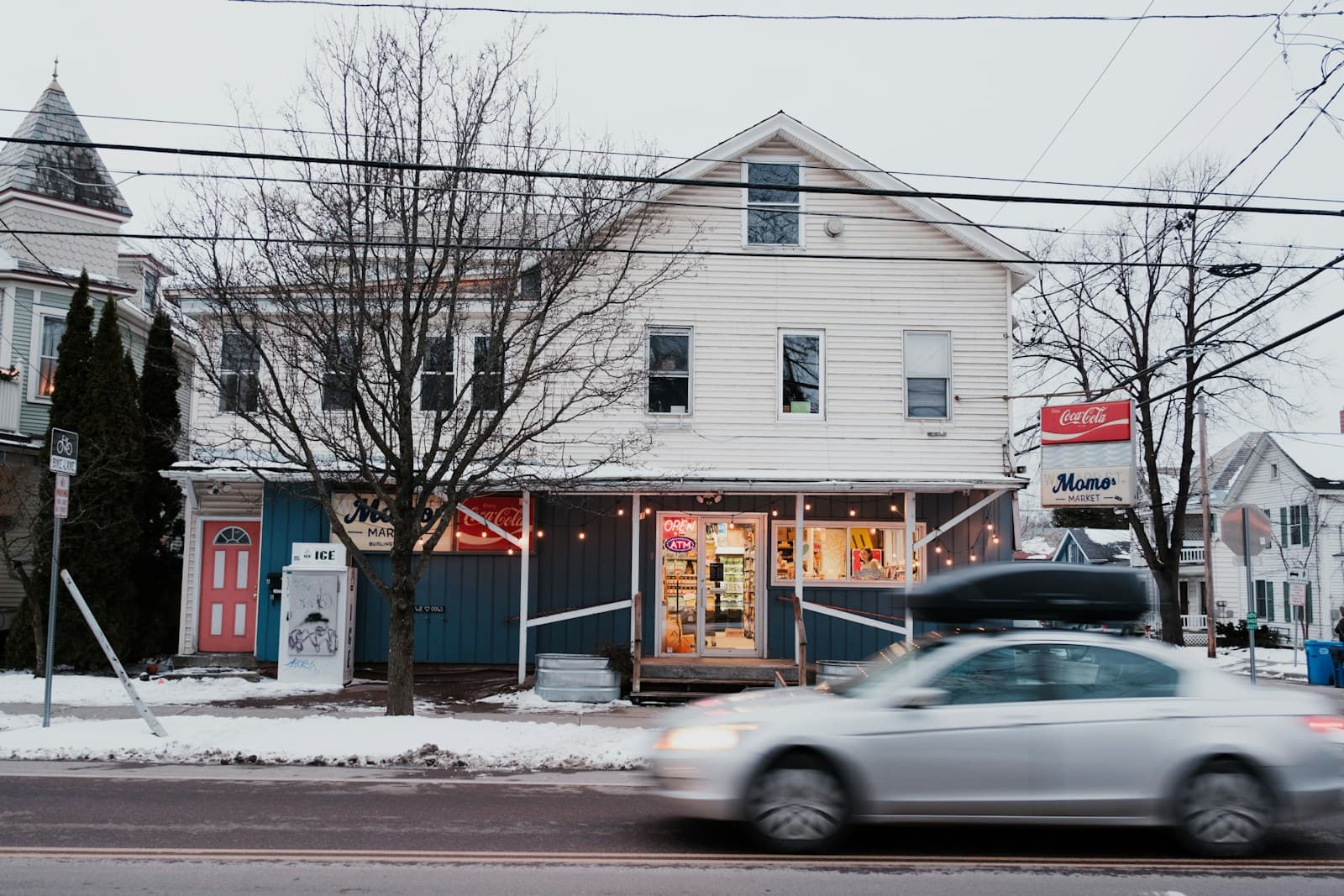
What Affects Rates in Burlington
- Lake Champlain Winter Weather: Burlington experiences lake-effect snow and ice storms from November through March, creating elevated collision risk for drivers with existing violations. Carriers typically price winter weather exposure into high-risk policies more aggressively in lakeside cities than rural Vermont locations.
- College Hill Traffic Density: The University of Vermont and downtown concentration create high pedestrian and vehicle density along Main Street, College Street, and Williston Road corridors. High-risk drivers in these ZIP codes often see higher premiums due to increased accident frequency in compact urban environments compared to suburban Chittenden County areas.
- Limited Transit Alternative: Burlington's Green Mountain Transit serves key corridors but most residents require personal vehicles year-round, meaning high-risk drivers cannot easily avoid insurance requirements. This creates a captive market where non-standard carriers know drivers must maintain coverage regardless of premium increases.
- Interstate 89 Commuter Corridor: Many Burlington residents commute via I-89 to surrounding towns, and winter highway conditions contribute to multi-vehicle accidents. Drivers with existing violations who commute daily on this corridor typically face higher comprehensive and collision premiums than those driving only local streets.
- Vermont DMV Immediate Suspension Protocol: Vermont DMV suspends licenses immediately for certain violations including DUI refusals and accumulating multiple speeding tickets, requiring SR-22 filing before reinstatement. Burlington drivers face tight timelines to secure SR-22 coverage before court dates, limiting their ability to shop extensively for competitive rates.
Find out exactly how long SR-22 is required in your state
Coverage Recommendations
Cost estimates are based on available industry data and vary by driver profile. These are not insurance quotes.
SR-22 Insurance
Vermont requires SR-22 certificates filed directly with the DMV for DUIs, multiple violations, and driving without insurance. In Burlington, expect to maintain this filing continuously for three years; any lapse triggers immediate suspension and restarts the clock.
$25–$50 filing fee plus elevated premiumEstimated range only. Not a quote.
Non-Standard Auto Insurance
Non-standard carriers specialize in high-risk profiles and operate throughout Burlington, often providing immediate coverage when standard carriers decline. These policies typically cost $150–$350/month but offer month-to-month flexibility and immediate SR-22 filing, critical for drivers facing reinstatement deadlines.
$150–$350/mo typical rangeEstimated range only. Not a quote.
Liability Insurance
Vermont requires minimum 25/50/10 liability limits, but high-risk drivers in Burlington should consider 50/100/25 or higher given the city's pedestrian-dense downtown and potential for serious injury claims. Increasing limits from minimum to 50/100/25 typically adds $15–$40/month but protects against asset exposure in urban collision scenarios.
Minimum coverage $80–$180/mo; higher limits add $15–$40/moEstimated range only. Not a quote.
Full Coverage
Full coverage combining liability, collision, and comprehensive is often required if you're financing a vehicle, and Burlington's winter weather makes comprehensive particularly relevant for ice and snow damage. High-risk drivers typically pay $200–$400/month for full coverage depending on vehicle value and deductible selection.
$200–$400/mo with collision and comprehensiveEstimated range only. Not a quote.