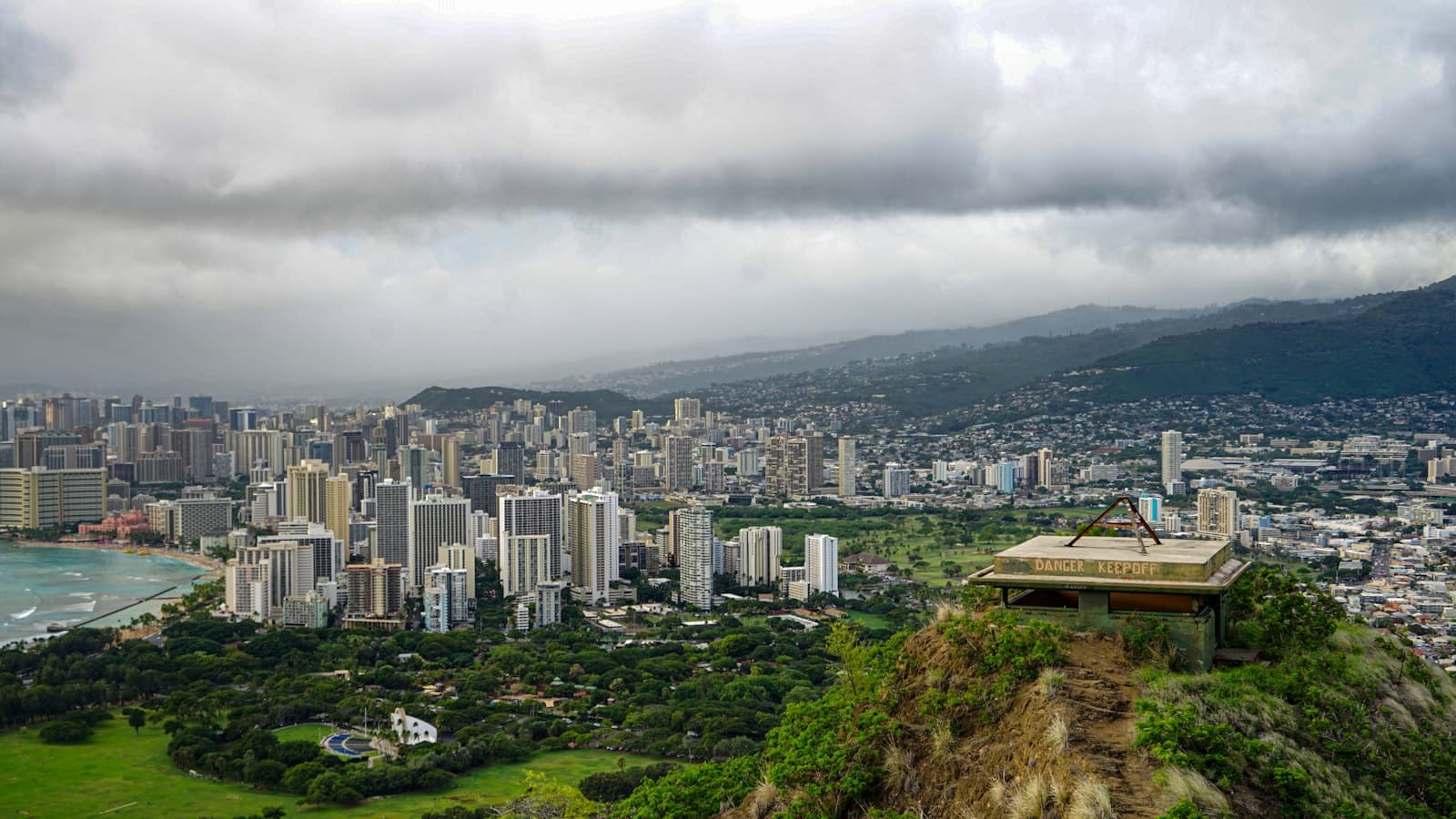
What Affects Rates in Honolulu
- H-1 Freeway Congestion and Accident Frequency: The H-1 corridor through Honolulu sees heavy daily congestion and elevated rear-end collision rates, especially during morning and evening commutes. High-risk drivers face steeper premiums here because insurers price in both your violation history and the statistical likelihood of another claim in high-density traffic.
- Vehicle Theft Rates in Urban Honolulu: Honolulu's urban core and certain neighborhoods report higher vehicle theft and break-in rates compared to outer Oahu communities. If you're financing a vehicle and need comprehensive coverage as a high-risk driver, expect this factor to push your premium toward the higher end of the range.
- No-Fault PIP System: Hawaii requires Personal Injury Protection (PIP) as part of its no-fault system, with a $10,000 minimum. High-risk drivers pay elevated PIP premiums because insurers view your violation as a predictor of future claims—even minor accidents trigger PIP payouts regardless of fault.
- Tourism Traffic and Unfamiliar Drivers: Honolulu's roads see constant influx of rental drivers unfamiliar with local traffic patterns, increasing accident exposure. Insurers factor this elevated risk into rates for all drivers, but high-risk profiles see compounded increases due to existing violation history.
- Limited Carrier Competition for High-Risk Profiles: Hawaii's island geography and regulatory environment mean fewer non-standard carriers actively compete here compared to mainland metro areas. This reduced competition can keep high-risk rates elevated, making it critical to compare the carriers that do write SR-22 policies in Honolulu.
Find out exactly how long SR-22 is required in your state
Coverage Recommendations
Cost estimates are based on available industry data and vary by driver profile. These are not insurance quotes.
SR-22 Insurance
The SR-22 is a certificate your insurer files with Hawaii proving you carry at least state minimum liability (20/40/10). You'll need continuous coverage for 3 years—any lapse triggers a license suspension and restarts the clock.
$25–$50 filing fee; underlying policy $180–$350/moEstimated range only. Not a quote.
Liability Insurance
Hawaii's minimum is 20/40/10 ($20k per person injury, $40k per accident injury, $10k property damage), but high-risk drivers should consider higher limits—50/100/25 or 100/300/50—to protect assets if you cause another accident. Minimum coverage alone typically runs $120–$220/mo for high-risk profiles in Honolulu.
$120–$220/mo for state minimumEstimated range only. Not a quote.
Full Coverage
Full coverage (liability + collision + comprehensive + PIP) is required if you finance or lease, and it's the coverage tier most high-risk drivers in Honolulu quote. Honolulu's theft risk and dense traffic make comprehensive and collision especially costly after a violation.
$180–$350/mo typical rangeEstimated range only. Not a quote.
Non-Standard Auto Insurance
Non-standard carriers specialize in high-risk drivers—DUIs, suspended licenses, multiple violations. In Honolulu, these carriers often offer the only affordable path to SR-22 compliance, though rates remain elevated until your violation ages off your record.
Competitive for high-risk profilesEstimated range only. Not a quote.